


Coordinator: Maria Luisa Minghetti
Heal Italia biobanks and sample collections
Heal Italia
A consortium of 72 partners dedicated to precision medicine for cancer and cardiovascular, metabolic and rare diseases.
Key strength
A substantial collection of human biological material stored in research biobanks and sample collections.
Objective
Establish a network connecting Heal biobanks and promote the use of biological material in accordance with the highest quality standards and ethical principles, in compliance with Italian legislation and international recommendations.
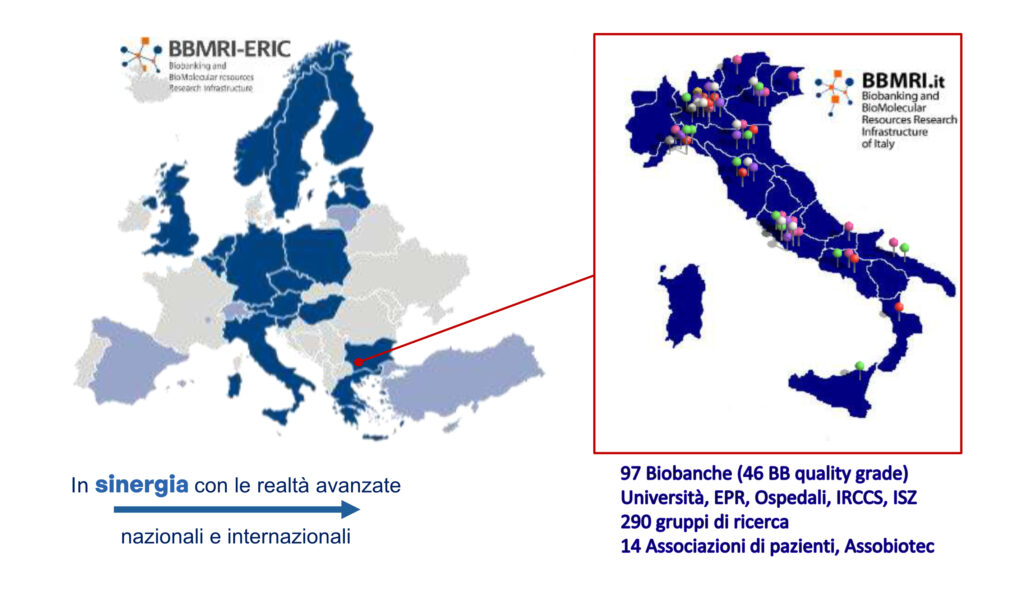
Heal Italia Biobank Network
- CRO – Istituto Nazionale dei Tumori Aviano
- Fondazione TLS
- IRCCS – Azienda Ospedaliero-Universitaria di Bologna
- IRCCS – Istituto Nazionale Tumori Regina Elena
- IRCCS – Istituto di Ricerche Farmacologiche “Mario Negri»
- Istituto Oncologico del Mediterraneo
- Istituto Superiore di Sanità
- Università Politecnica delle Marche
- Università degli Studi di Catania
- Università degli Studi di Cagliari
- Università di Foggia
- Università degli Studi di Milano – Bicocca
- Università degli Studi di Modena e Reggio Emilia
- Università degli Studi Sapienza – Dip Medicina Sperimentale
- Università degli Studi di Verona
Strengthening of the Biobanking and Biomolecular Resources Research Infrastructure of Italy – CUP B53C22001820006
The PNRR project “Strengthening BBMRI.it” aims to reinforce the already extensive network of Italian biobanks within the BBMRI.it Research Infrastructure (www.bbmri.it), selected by the Italian Ministry of Universities and Research (MUR) as a priority Research Infrastructure under the National Plan for Research Infrastructures (PNIR) 2021–2027 (link).
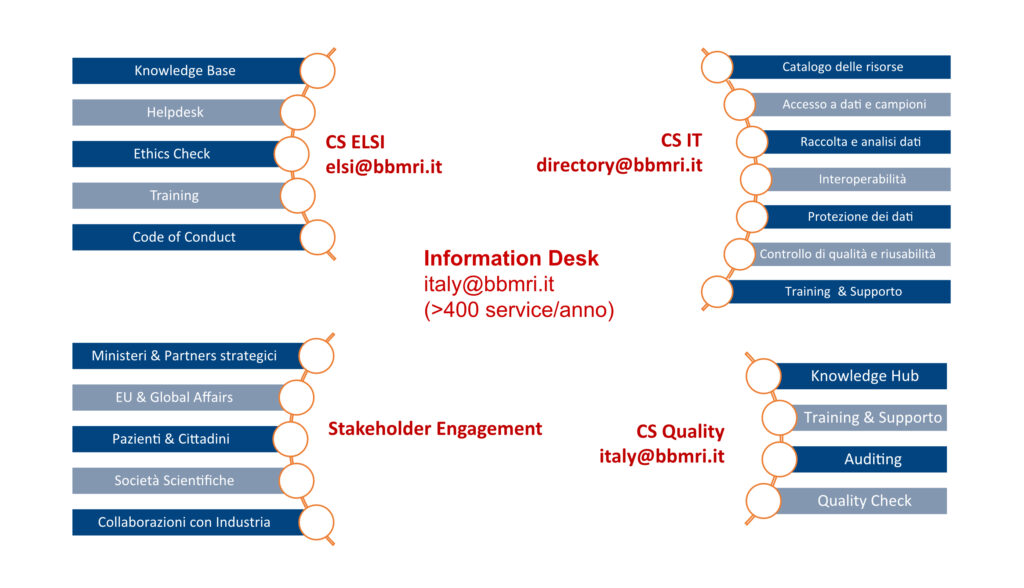
The proper collection and high-quality preservation of human biological samples and their associated data are fundamental to reproducible and effective translational research. To address this challenge, the European Union and its Member States have funded a dedicated Research Infrastructure, BBMRI. Italy contributes 97 biobanks to the national node BBMRI.it, 47 of which are recognised by the European hub, BBMRI-ERIC (bbmri-eric.eu). Distributed throughout Italy, BBMRI.it provides support and access to biobank samples through a website, a Help Desk and Common Services covering information technology (Common Service IT), quality (Common Service Quality) and ethical, legal and social issues (Common Service ELSI).
The PNRR reinforcement project “Strengthening BBMRI.it” aims to support biobanks’ digital skills, improve the visibility of biological resources in the European and national catalogues, and foster the development of new infrastructure nodes. Drawing on PNRR investment and BBMRI.it’s existing expertise, new technically and scientifically advanced biobanks will be established for specific collections, including organoids, microbiome samples, induced pluripotent stem cells and adult progenitor cells. The Italian Network of Core Facilities (NICo) will contribute its expertise to enhance the value of biological samples available through BBMRI.it by characterising them.
The project includes strengthening Common Service ELSI and Common Service IT, alongside a Work Package dedicated to the standardisation and improved usability of sample-associated data in line with FAIR principles. These three actions will expand and improve access to the data.
Finally, the project provides access to infrastructure resources following the model of Trans-National Access, the European Open Science mechanism that enables the use of research infrastructure resources.
Research biobanks
Within a shared and transparent framework, each Italian research biobank that has signed the BBMRI Partner Charter presents itself using a common language, describes its activities and makes its ELSI tools publicly available, from biobanking consent to Material Transfer Agreements, together with good-practice governance instruments, including its regulations and rules for access and the return of results.
Biobanking Unit – BMS Biobank
The Biobanking Unit has operated at the Azienda Ospedaliero Universitaria Pisana (AOUP) since 2016. It was established to centralise, maintain and improve AOUP’s internal biobanking activities. The BMS Multispecialty Biobank was formally established through an organisational document approved in March 2020 (AOUP-DelDG No. 272 of 27/03/2020). The BMS Biobank expands the mission of the Departmental Biobanking Section by including both a healthcare component (Tissue Establishment and Regional Biological Archive) and a research component. It serves as an integrated, cross-cutting service platform for AOUP facilities and other institutions with scientific and healthcare purposes. The facility is part of the BBMRI Research Infrastructure, holds ISO 9001:2015 certification and is accredited to ISO 20387 for serum, plasma, saliva and nasopharyngeal tissue. The BMS Biobank processes and stores each biological sample in accordance with national and international guidelines, harmonising storage and processing variables under specific quality standards. This ensures complete traceability of all activities performed on each sample and of its associated clinical and scientific information.
Human biological material, omics sciences and precision medicine
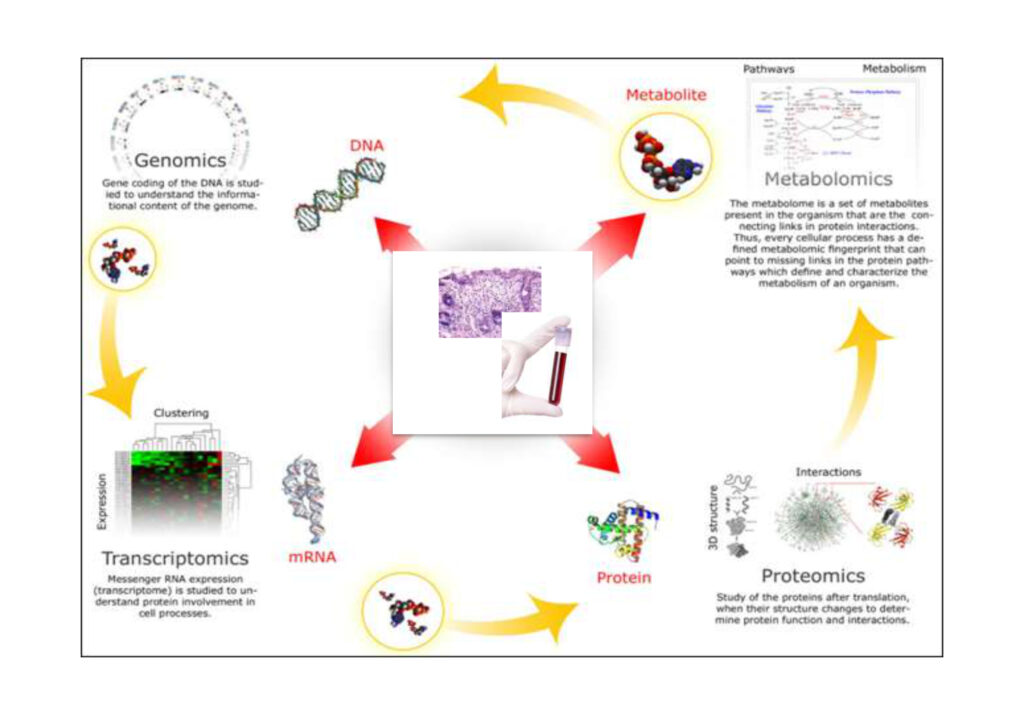
Scientific information obtained from human biological material through the continuous development of omics sciences is central to progress in translational research and precision medicine.
Much of our current knowledge of diseases and diagnostic and therapeutic options is based on studies of human biological material. This material, understood as biological samples and associated epidemiological, clinical and experimental data, is a critical resource for translating advances in molecular medicine and omics technologies into better human health. Biological material is an asset for research; when it meets quality requirements, its value increases with the quantity and quality of the associated information.
Research using human biological material and research biobanks
Research using human biological material must follow a set of fundamental principles. It must always be conducted transparently and with respect for the person from whom the material originates.
The use of residual biological material should be preferred to collecting new samples, while respecting ethical requirements, participants’ rights and minimum quality requirements.
The use of biological material must be optimised by applying the best available preparation and preservation techniques, associating samples with high-quality clinical data and obtaining participants’ explicit consent for research use.
The scientific community must foster trust with research participants and society as a whole.
Research biobanks at the interface between patients and medical research
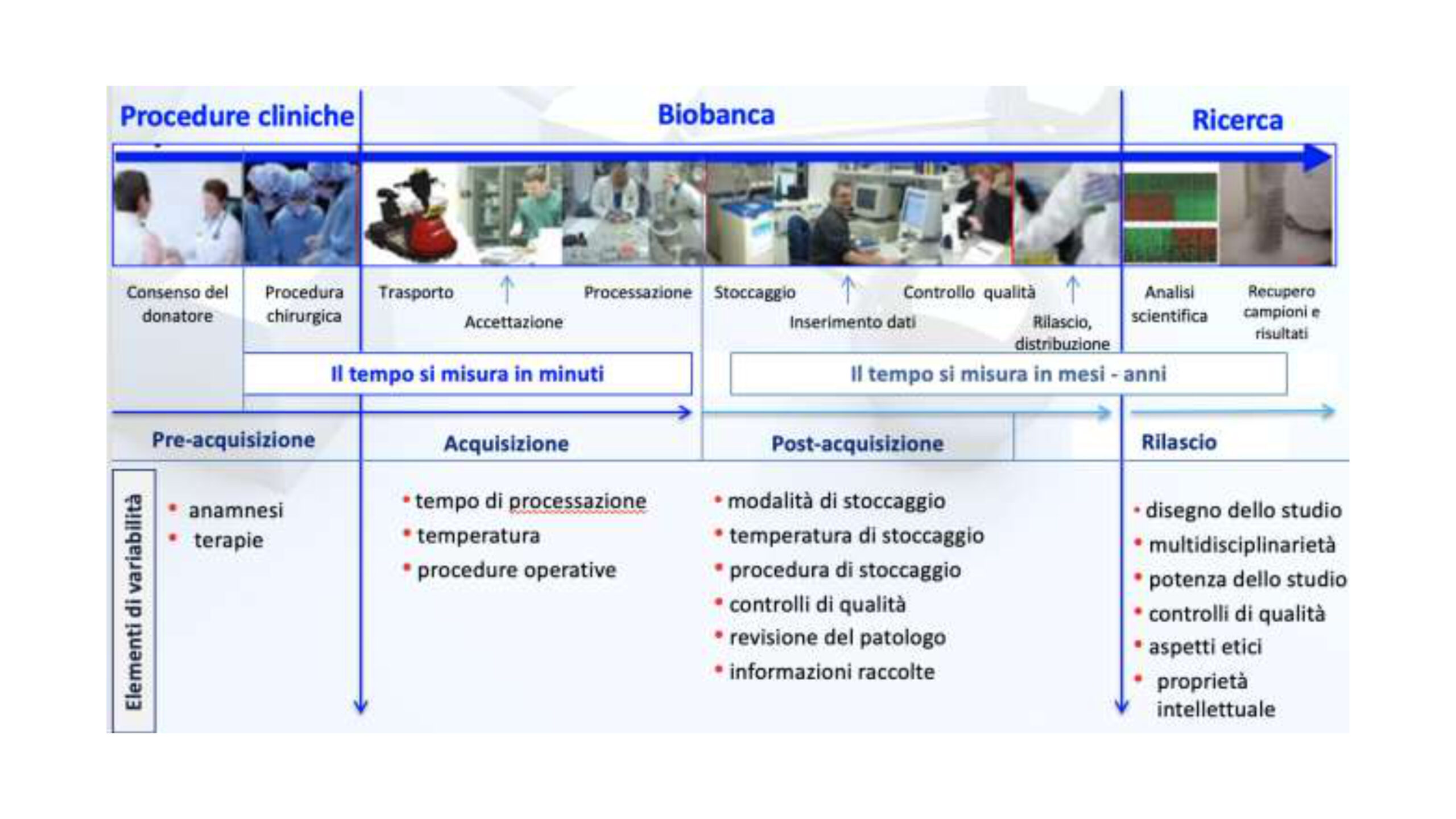
Research biobanks safeguard research quality, ethical requirements and participants’ rights at the interface between patients and medical research. Biobanking ensures that biological material is collected and used in accordance with
ethical and regulatory principles, and that sample quality is maintained through standard operating procedures (SOPs). Sharing biobanked samples and research results under an access policy is central to a research biobank’s work.
Research biobanks – Core elements
- Respect for participants’ wishes: informed consent
- Privacy protection
- Sample custodianship and impartial oversight of sample sharing
- Shared access criteria and project assessment procedures
- Rules for sample and data transfer and the return of results
- Outcome collection and reporting on completed research
- Interoperability and participation in networks
- Public information and engagement with citizens and patient communities
Research biobanks for rare diseases
Rare diseases pose unique research challenges, often because samples are scarce and the diseases are diverse. Research biobanks support progress by preserving and sharing biological material
according to quality and transparency criteria, with an active role for the rare disease community in raising awareness and promoting research biobanking.
Telethon Network of Genetic Biobanks (TNGB)
- 11 biobanks distributed throughout Italy
- Established in 2007 through a Fondazione Telethon research project
- Over 120,000 biological samples covering approximately 1,000 rare genetic diseases
- A central role at national and European level:
BBMRI-ERIC and its Italian node
EuroBioBank
RD-Connect (FP7 2012-2018)